Amino Acids for El Nino Crop Stress
Introduction: Why Amino Acids Matter in a Changing Climate
 Global agriculture is entering a period where climate stress is no longer an occasional problem. It is becoming a regular production challenge.
Large-scale climate events such as El Nino can expose crops to several stress factors at the same time, including drought, heat waves, irregular rainfall, salinity pressure and reduced nutrient uptake.
Under these conditions, crops do not simply need more fertilizer. They need better physiological support.
Plants must use water more efficiently, keep their root systems active, maintain photosynthesis, use nitrogen more effectively and recover quickly after stress. This is where amino acid-based plant nutrition becomes increasingly important.
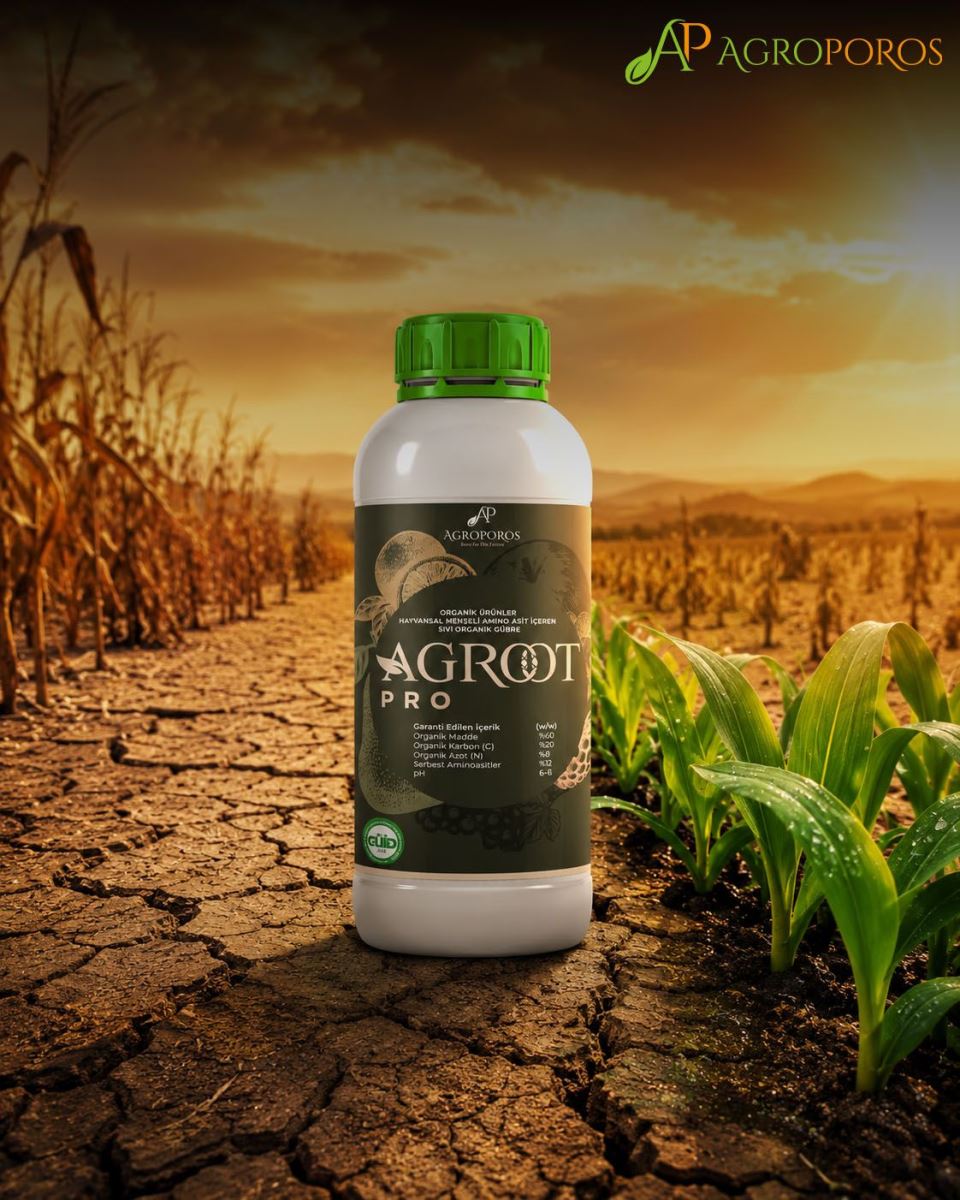
Developed by Agroporos, Agroot Pro is an amino acid-based plant nutrition solution designed to support crop performance under challenging climate conditions such as El Nino-related drought, heat and salinity stress.
What Is El Nino and Why Does It Matter for Agriculture?
El Nino is a large-scale climate phenomenon that affects global weather patterns. Depending on the region, it can lead to drought, excessive rainfall, high temperatures, irregular seasonal transitions and increased climate uncertainty.
For agriculture, the main problem is not only the lack of water. El Nino can create a combination of stresses that affect the plant at the same time.
These include:
Drought and water deficit
High temperature and heat stress
Increased soil salinity and high EC conditions
Reduced root activity
Lower nutrient uptake
Decreased photosynthesis
Poor flowering, fruit set and grain filling
Slower post-stress recovery
When these stresses occur together, the plant’s natural metabolism becomes overloaded. Growth slows down, yield potential decreases and quality losses may appear.
How El Nino Stress Affects Plant Physiology
1. Water Stress and Stomatal Closure
When drought begins, plants close their stomata to reduce water loss. This is a natural defense mechanism. However, stomatal closure also reduces carbon dioxide intake.
As a result, photosynthesis slows down.
When photosynthesis decreases, the plant produces less energy. This affects root development, flowering, fruit set, grain filling and overall crop performance.
1. Heat Stress and Yield Loss
High temperatures are especially harmful during sensitive growth stages such as flowering, fertilization, fruit set and grain filling.
Under heat stress, pollen viability may decrease, flower drop may increase and the plant may struggle to complete normal reproductive development. This can directly reduce yield and quality.
1. Salinity and High EC Pressure
During dry periods, salts can become more concentrated in the soil solution. Even when water is present in the soil, high salinity can make it difficult for the plant to absorb water.
This creates a physiological drought effect.
The plant may show symptoms such as weak roots, yellowing leaves, poor growth, low fruit quality and reduced nutrient efficiency.
1. Reduced Nutrient Uptake
Under drought or heat stress, root activity decreases. When roots are less active, the plant cannot efficiently absorb nitrogen, potassium, calcium, magnesium and micronutrients.
This means that even a well-fertilized crop may still suffer from nutrient-use problems during El Nino conditions.
The Role of Amino Acids in Plant Stress Management
Amino acids are the basic building blocks of proteins in plants. However, their role in agriculture goes beyond nutrition.
Free amino acids and short peptides are organic compounds that help plants respond more efficiently under stress conditions. They support key physiological processes such as root development, osmotic balance, photosynthesis, nitrogen metabolism and stress recovery.
Under normal conditions, plants can synthesize amino acids by themselves. However, during drought, heat or salinity stress, this process requires additional energy. A stressed plant already has limited energy available.
By applying amino acids externally, the plant receives ready-to-use organic compounds. This can help reduce metabolic pressure and support defense, growth and recovery processes.
This is why amino acid-based products should not be considered only as conventional fertilizers. They should be positioned as part of a professional plant stress management strategy.
Agroot Pro: Amino Acid-Based Support for Climate Stress Conditions
Agroot Pro is developed by Agroporos as an effective amino acid-based plant nutrition solution for crops exposed to climate-related stress.
It is especially suitable for periods when plants face:
Drought stress
Heat stress
Salinity pressure
High EC conditions
Reduced nutrient uptake
Weak root activity
Slow recovery after stress
Agroot Pro helps support the plant’s physiological balance during difficult growing conditions. Its amino acid-based structure allows the crop to maintain more stable metabolic activity when environmental stress increases.
Key Benefits of Agroot Pro for Plants
Agroot Pro provides multi-directional support during stress periods.
Supports Water Balance
Under drought conditions, maintaining cellular water balance is critical. Agroot Pro supports the plant’s osmotic balance and helps the crop maintain physiological activity under water stress.
Promotes Root Activity
A strong root system is one of the most important defenses against El Nino-related stress. Agroot Pro supports root activity, helping the plant absorb water and nutrients more efficiently.
Helps Maintain Photosynthesis
Photosynthesis is one of the first processes affected by drought and heat. Agroot Pro supports leaf activity and helps protect the plant’s photosynthetic capacity under stress conditions.
Supports Leaf Greenness and Plant Vitality
Healthy leaves are essential for energy production. Agroot Pro helps maintain leaf vitality, which is especially important during critical growth stages.
Supports Nitrogen and Nutrient Use Efficiency
Under stress, nutrient uptake and assimilation become less efficient. Agroot Pro supports the plant’s ability to use nitrogen and other nutrients more effectively.
Helps Post-Stress Recovery
After drought, heat, salinity, wind, hail or excessive rainfall, plants need rapid metabolic recovery. Agroot Pro supports new root and leaf activity, helping crops return to active growth.
Agroot Pro Application Strategy Under El Nino Conditions
The following application program is a general recommendation. Final application rates should always be adjusted according to crop type, growth stage, stress level, soil conditions, irrigation water quality and label instructions.
1. Pre-Stress Preparation
When to apply:
7–10 days before expected drought, heat wave or salinity stress.
Foliar application:
1.5–2.0 L/ha
Drip irrigation / root application:
3.0–5.0 L/ha
Purpose:
To strengthen root and leaf activity, support water and nutrient use and prepare the plant before stress becomes severe.
Preventive use is usually more effective than waiting until the plant is already under heavy stress.
1. During Drought and Heat Stress
When to apply:
When drought, high temperature or intense evaporation pressure is observed.
Foliar application:
1.5–2.5 L/ha
Drip irrigation / root application:
4.0–6.0 L/ha
Purpose:
To support metabolic activity, water balance, photosynthesis and nutrient uptake during active stress.
Applications should be made early in the morning or late in the afternoon. Foliar application during extreme heat should be avoided.
1. Post-Stress Recovery
When to apply:
After heat, drought, salinity, hail, wind, excessive rainfall or other stress events.
Foliar application:
2.0 L/ha
Drip irrigation / root application:
4.0–5.0 L/ha
Purpose:
To support new root and leaf activity, reactivate photosynthesis and help the plant return to normal growth.
Agroot Pro Use by Crop Group
Wheat and Barley
Wheat and barley are sensitive to drought and heat stress, especially during tillering, stem elongation, heading and grain filling.
Recommended timing:
Tillering
Stem elongation
Before heading
Beginning of grain filling
Recommended foliar application:
1.5–2.0 L/ha
Main objective:
To support root development, leaf greenness, nitrogen use and grain filling.
Maize
Maize is highly sensitive to heat and water stress during tasseling, pollination and cob filling.
Recommended timing:
4–6 leaf stage
Before tasseling
After fertilization
Recommended foliar application:
1.5–2.0 L/ha
If drip irrigation is available:
3.0–5.0 L/ha
Main objective:
To support root strength, pollination resilience and cob filling.
Vegetables
Vegetables can be strongly affected by heat, salinity and irregular water availability. These stresses may cause flower drop, poor fruit set and quality loss.
Recommended timing:
After seedling transplantation
Before flowering
During fruit set
During intensive harvest periods
Recommended foliar application:
1.5–2.0 L/ha
Drip irrigation / root application:
3.0–5.0 L/ha
Main objective:
To support flower set, fruit development, leaf activity and crop quality.
Olive
Olive trees are generally tolerant, but flowering, fruit set and oil accumulation can be affected by drought and heat stress.
Recommended timing:
Before flowering
After fruit set
During summer drought
During oil accumulation
Recommended foliar application:
1.5–2.0 L/ha
Root application:
4.0–5.0 L/ha
Main objective:
To support flowering strength, fruit set, leaf resilience and drought tolerance.
Vineyards
Vineyards are affected by water stress during shoot development, flowering, berry set and ripening.
Recommended timing:
Shoot development
Before flowering
After berry set
Before ripening
Recommended foliar application:
1.5–2.0 L/ha
Main objective:
To support shoot balance, flower and berry set, quality and stress tolerance.
Citrus and Fruit Trees
Citrus and fruit trees may suffer from flower drop, fruit drop, reduced fruit size and weak recovery under heat and water stress.
Recommended timing:
Before flowering
After fruit set
During fruit enlargement
During heat pressure
Recommended foliar application:
2.0 L/ha
Drip irrigation / root application:
4.0–6.0 L/ha
Main objective:
To support fruit set, fruit size, leaf activity and post-stress recovery.
Why Agroot Pro Should Be Part of an El Nino Crop Program
El Nino conditions require a proactive crop management strategy. Waiting until visible damage appears is often too late.
Agroot Pro helps growers act before stress causes serious yield and quality losses. It can be used as part of a preventive and corrective program to support crop resilience under challenging climate conditions.
The strongest positioning for Agroot Pro is clear:
Agroot Pro supports root activity, photosynthetic capacity, water balance and recovery strength under El Nino-related drought, heat, salinity and nutrient-use stress.
Conclusion: Preparing Crops for the Future of Agriculture
El Nino and similar climate events create serious risks for agricultural production. These risks are not limited to water shortage. Crops may face drought, heat, salinity, reduced nutrient uptake and photosynthesis loss at the same time.
Amino acid-based products are important tools for supporting plant resilience under these conditions.
Developed by Agroporos, Agroot Pro helps crops enter stress periods in a more prepared condition, use available water and nutrients more efficiently and recover faster after stress when applied at the right time and within the right program.
The future of agriculture will not belong only to those who apply more fertilizer. It will belong to those who prepare plants for climate stress at the right time.
Agroot Pro offers growers an economical, effective and professional amino acid-based support solution for climate stress management.